





Friday, September 28, 2007
Is Your Home a Tax Trap?
"Have you refinanced your mortgage and taken a chunk of the equity in cash? Will you do so when your adjustable-rate loan resets its interest rate? If you fail to follow some little-known rules for calculating your home mortgage deduction, you may be writing off too much interest. Instead of saving on taxes, you could wind up owing them."
"In general, the IRS lets you deduct 100% of the interest you pay on one or more home mortgages, up to a total loan value of $1 million. But when you refinance and withdraw cash, the rules change: Only the interest on your ***original mortgage balance***, plus an additional $100,000, qualifies for a deduction. (If you want to take out more cash, use a home-equity loan or line of credit. The law allows a separate deduction for interest on borrowings of up to $100,000.)"
***Acquisition indebtedness is debt that is incurred in acquiring, constructing, or substantially improving the principal or second residence of the taxpayer and is secured by such property.
"There's no sign the IRS is currently hunting down taxpayers who may be miscalculating the mortgage deduction, but the error could trip you up in an audit. Rosica says the best way to protect yourself is to make sure you calculate this year's taxes correctly. If you've taken excessive deductions in past years, you can also file an amended return."
Read the entire article HERE.
For further clarification ask the advice of a good tax attorney or tax accountant.
Labels: Bay Area Real Estate, BusinessWeek, IRS, Mortage deduction


Saturday, August 04, 2007
Bonfire of the Builders - BusinessWeek
"Traditional mortgage companies and banks unleashed a barrage of loans, many to borrowers with iffy credit histories who didn't bother to read the fine print about upwardly mobile interest rates. Wall Street egged on the often-reckless underwriting by buying vast quantities of home loans for repackaging as securities. Now that the boom has fizzled and foreclosure rates are rising, the important role of large homebuilders as lenders is also coming into sharper focus."
"Even as the housing supply began to exceed demand last year, builders kept sales brisk by pushing adjustable-rate, interest-only, and other risky loans."
STEALING FROM THE FUTURE
Now it's payback time. It is likely to take two to three years, by various estimates, for the excess supply to be soaked up. The boom stole sales from the future as people bought houses earlier than they might have a few years ago. From the same issue of BusinessWeek, by Peter Coy. Go to the Full Story.
Labels: Bay Area Real Estate, BusinessWeek, Foreclosure, Home Builders, Interest Rate, Mortgage Lenders, Real Estate Cycles, Subprime Loans, Wall Street
Monday, July 30, 2007
Standards Stricter for Borrowers
Thinking about refinancing a mortgage or getting a no-money-down loan to buy a home? Something that was relatively easy to do several months ago may be a lot harder in today's stricter lending environment.
In recent months, many lenders have tightened underwriting standards for no-money-down loans, also known as 100 percent financing, in response to the subprime mortgage mess that has seen foreclosure activity soar this year.
The upshot is that today many borrowers are finding it harder to get a loan than a few months ago even though interest rates are at the same level as last year. To qualify, borrowers may find that they will need to document their income, bolster their savings or find a co-signer.
Those who are getting hit hardest by the tightening loan standards are those with low credit scores, subprime borrowers and people who are unable or unwilling to document their income, mortgage experts say.
So what do people need to get a loan if they are having a hard time in today's lending environment? The Full Story and Tips can be viewed HERE.
A related story from U S News; "Lenders Crack Down After Subprime Collapse."
And from BusineeWeek; "The Subprime Mess, Let the Blame Begin."
Labels: Bay Area Real Estate, BusinessWeek, Contra Costa Times, Interest Rate, Real Estate Cycles, Subprime Loans
Monday, June 18, 2007
The Foreclosure "Rescue" Racket
This is an article by Dean Foust & Brian Burnsed of BusinessWeek.
MILLIONS OF TARGETS
In most states, it's not illegal for one person to persuade another to sign his or her home over. And proving it was done through deceptive means can be tricky if the promises to help the owner were made verbally, as is often the case. So many victims have little recourse except through civil proceedings. But with the number of foreclosures estimated to soar to more than 2 million over the next couple of years, more and more policymakers are scrambling to keep the situation from turning into an epidemic by enacting tougher penalties for such practices.
View the entire article HERE.
California Foreclosure Activity Jumps Again. DataQuick
Foreclosures Hit 37-Year High. Realtor Magazine Online
“Legal Guide to Foreclosure-related Transactions" C.A.R.
The Foreclosure Report from Mike at Patagonia Finance
Labels: Bay Area Real Estate, BusinessWeek, CAR, DataQuick, Interest Rate, Real Estate Cycles, Realtor Magazine
Thursday, March 22, 2007
Subprime Loans Going Under
"It's essentially eliminating 15 (percent) to 20 percent of the market," said Ed Leamer, director of the UCLA Anderson Forecast. "What drove the California marketplace wasn't foreign borrowers but entry-level buyers helped into the market by exotic loans." as quoted in an article By Barbara E. Hernandez of the CONTRA COSTA TIMES. Read the entire article HERE.
"Problems in mortgage lending go "well beyond subprime," and the tightening of loan underwriting standards now underway is likely to push demand for homes down 15 percent and depress prices by 5 percent this year. Quoted from Inman's Matt Carter, Here for the rest of the article."
That's the rather gloomy forecast by analysts who follow the stocks of major home builders for Banc of America Securities LLC.
"In a report issued Tuesday, "Dissecting the Mortgage Distress," BAS analysts said there's already an excess supply of 800,000 existing homes on the market, and another 300,000 will soon be added to inventories through foreclosure."
But the biggest problem facing housing markets may be the tightening of credit that's taking place as lenders put the brakes on risky loans including low-documentation and zero-down-payment mortgages, the report said.
"We expect loans with a combination of low FICO scores and high (loan-to-value ratios) will end or tighten with many buyers choosing to remain as renters," wrote BAS analyst Daniel Oppenheim. BAS is a subsidiary of Bank of America Corp.
"BAS expects home prices to fall by 5 percent in 2007. Coming on the heels of a 2 percent price decline in 2006, the 7 percent cumulative price drop would be the largest decline in home prices since the early 1980s."
"Falling prices are likely to cause even more defaults and foreclosures, BAS analysts said."
"We do not anticipate that the mortgage credit issues are solely a result of the loan underwriting from '06," the report noted. "Rather, our view is that a primary driver of the problem is the decline in home prices, which leaves some households owing more on their mortgage than their home is worth."
"A First American CoreLogic Inc. study released Monday contained a similar finding, predicting that each 1 percent reduction in home prices will result in an additional 70,000 foreclosures." - Subprime lending meltdown seen as threat to economy
"The meltdown in subprime lending could have broader impacts on the economy, as mortgage lenders tighten restrictions on a broad spectrum of loans including those made to small businesses, said Christian E. Weller, senior economist at the Center for American Progress."
"With subprime lenders pulling back, it means fewer people can enter the market, because people looking to sell their homes have a harder time doing so, or must lower their price," Weller said. "Prices stagnate, there are fewer home sales, home construction and home equity cash outs."
Top subprime lenders: Where are they now?
2006 subprime loan performance will be worst in a decade
"Traps of Easy Credit" Reckless lending to blame for mortgage woes - James Grant
Exotic loans become commonplace
"Lenders began offering nontraditional loans that allowed borrowers to purchase homes they might not otherwise have been able to afford, especially in markets where home prices had seen annual increases at double-digit rates."
"These nontraditional or "exotic" loan types, such as payment-option ARM and interest-only loans, allowed borrowers to start out making monthly payments that in some cases didn't even cover all of the interest owed on a loan, let alone the payback on any of a loan's principal."
"If the loans that fueled the boom become unavailable, first-time home buyers who are ready to make the plunge may be unable to obtain loans that suit their needs. Even homeowners with sensible loans could get hurt in the fallout, because of the ripple effect that would take place if sellers who are ready to move up to pricier digs aren't able to sell their starter homes to first-time buyers."
Labels: Bay Area Real Estate, BusinessWeek, Fico Score, Inman News, Interest Rate, Real Estate Cycles, Subprime Loans, UCLA Anderson Forecast
Friday, February 09, 2007
Why Housing Hasn't Hit the Skids
Read the full article written by Peter Coy from BusinessWeek, HERE.
Low rates are a major factor
There's a related article in the same February 19, 2007 issue of BusinessWeek, entitled, "It's a Low, Low, Low, Low-Rate World," written by Michael Mandel and David Henry, that support "the surprise that low rates are still keeping the floor under housing."
Money is cheap. And some experts say it could stay that way for years. That's creating opportunity—and brand new risks
Labels: Bay Area Real Estate, BusinessWeek, Housing Bust, Interest Rate, Low Rate, Real Estate Cycles
Tuesday, January 16, 2007
Resetting the "Odometer"
Agents are pulling houses off the market and then presenting them as new offerings.
"With open houses as quiet as death lately in many parts of the country, sellers' agents are trying everything they can to make a sale, including sometimes tweaking the computerized data that potential buyers depend on. Fresh listings attract attention and can fetch higher prices because buyers are less likely to make lowball offers."
KNOWING WHAT TO LOOK FOR
"When many homes in an area are re-listed as new, it skews the "average days on market" statistic, making the market look healthier than it really is. For sellers, refreshing a listing can also disguise the fact that the previous listing was at a higher price. Buyers often regard a price cut as a sign of weakness."
"Whether it's within the local rules or not, the practice of relisting houses to give them a new debut is a symptom of an imbalance in market knowledge. Buyers can sometimes spot manipulation of the databases, but you have to know what to look for, and many buyers' agents don't."
"Is this wrong? Many MLS organizations think so."
Labels: Bay Area Real Estate, BusinessWeek, Housing Watch, Multiple Listing Service, Real Estate Cycles
Sunday, July 02, 2006
Housing: Where the Market is Really Heading
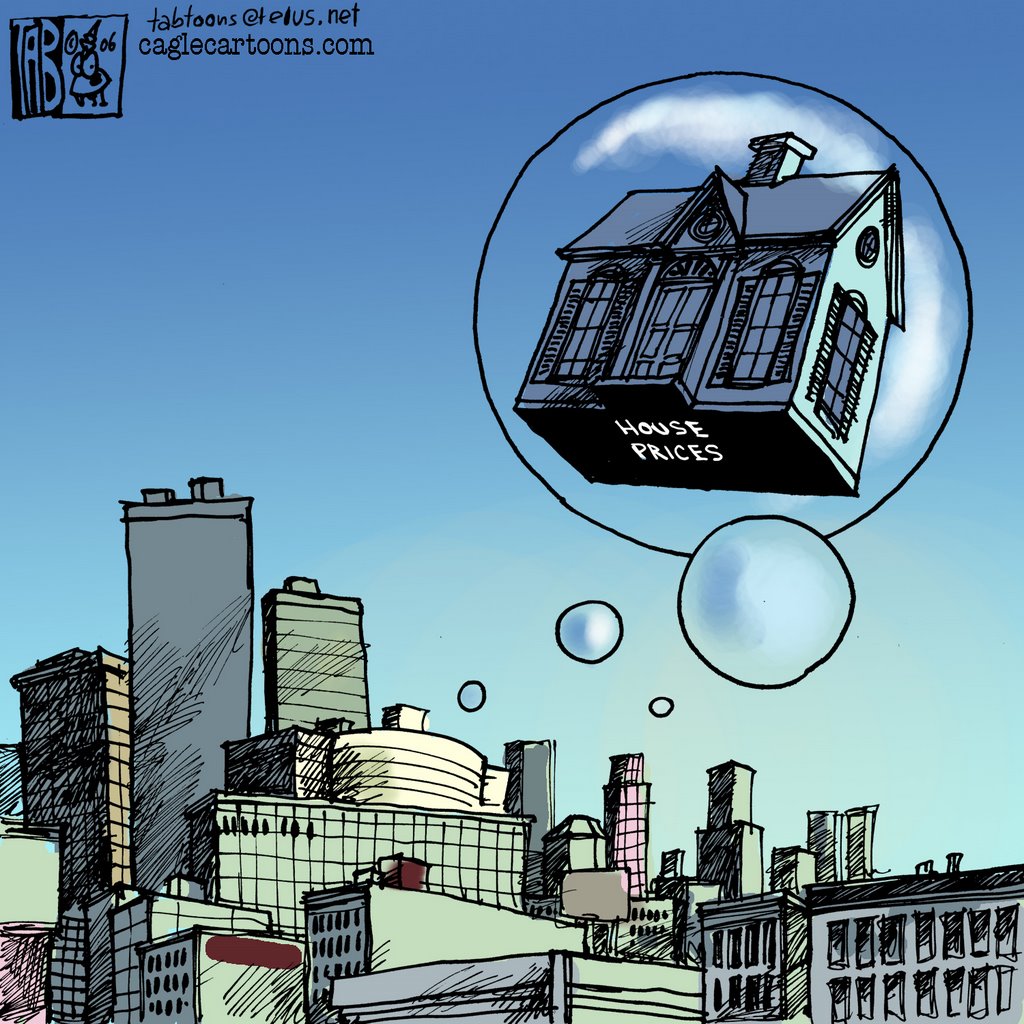
"Amid all the ups and downs in the housing data of late, how you feel about the direction of this year's most closely watched economic sector may well depend on which day of the week you check the news." You can read the full article by James Cooper entitled, "Housing: Where the market is really heading," in the July 10th issue of BusinessWeek.
"Looking past all the recent month-to-month noise in the numbers, it's clear that demand for both new and existing homes is down from last year's peaks, and that the growth rate of prices continues to slow. However, the drop in sales is not as steep as the data had suggested earlier in the year. Sales are declining in an orderly fashion, not collapsing, and that pattern will most likely continue for the rest of the year."
Here's what Christopher Cagan, PH.D., director of research at First American Real Estate Solutions, has to say in his paper entitled, “The Real Estate Cycle in 2006,” dated May 18, 2006.
“The residential real estate market stands at a pivotal position in the spring of 2006. Over the previous few years, home prices have risen rapidly almost everywhere. In many coastal areas, prices have more than doubled since 2000. In recent months, the market has returned to more normal conditions. In many places, the inventory of properties offered for sale has increased. Buyers no longer rush to meet or exceed the asking prices of sellers. In some cases sellers have reduced their prices. On the whole, price appreciation has slowed down or flattened, but there has been no crash. Depending on the local area, prices are rising at single-digit levels, flattening out, or slightly declining – in other words, conditions have returned to normal after a very strong bull market.”
Finally, David Lereah, the chief economist for the National Association of Realtor's was asked in an interview; "Do you think the housing market could ever crash?" Here's his answer;
"I'm getting tired of all these doomsayers. We live in houses, and our houses are not going to crash. This isn't the stock market.... Local economies are relatively healthy. There's job creation -- this isn't a scenario where bubbles burst. Can there be one or two or three or several local markets where prices actually go down? Yes. But to generalize for 30 markets or the whole real estate marketplace -- that's absurd."
"Why the Bubble Won't Burst," interview with Michael Youngblood, Managing Director of Friedman Billings Ramsey & Co.
Housing Bubble Prospects Question and Answers provided By NAR.
You can also view the Anti Bubble Reports on their website for Market-by-Market Home Price Analysis Reports.
Labels: Bay Area Real Estate, BusinessWeek, First American Real Estate Solutions, NAR, Real Estate Bubble, Real Estate Cycles


 Links
Links


